Why do we love mystery tunnel stories so much?
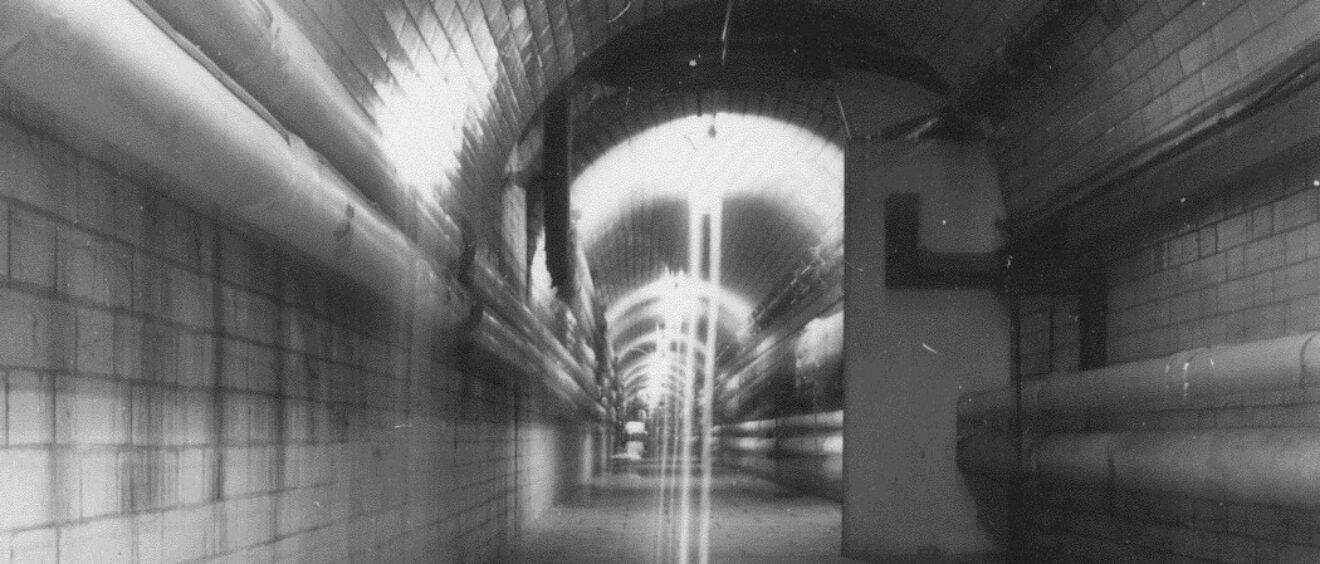
Urban legends about secret tunnels are a fascinating blend of human curiosity, fear of the unknown and a sense of escape. The Old Manor Hospital tunnels are no exception and come up time and time again during history community talks and events. Several theories dominate: they were built to transport patients from the railway station to the psychiatric hospital; they served to separate male and female patients; they travel under the Wilton Road to an unknown location; they were used by well-to-do/famous/royal patients to access the chapel on site ….
These legends tap into deep psychological and cultural archetypes, which is why they have persisted for so long. Here are some reasons why they resonate so much:
- The allure of the hidden
Humans are naturally curious creatures and there’s something incredibly compelling about the idea of hidden spaces beneath our feet. Tunnels, by their nature, represent something hidden away from the everyday world. They imply that there are secrets just out of reach, waiting to be uncovered.
The “What’s under the surface?” effect: Whether it’s buried treasure, secret societies, or hidden escapes, the idea that there’s something beneath our feet that we aren’t aware of triggers our imagination.
- Rebellion and escape
Tunnels often symbolize escape. Escape from oppression, from danger, or from society’s expectations. Urban legends about secret tunnels often involve daring escapes from prisons, asylums, or regimes. The classic “escape through the tunnel” story is powerful because it represents breaking free from constraints, whether physical or societal.
Historical influence: Many historical figures or groups have used tunnels to evade capture, and this history can morph into myth over time.
- The power of history
Tunnels often become part of the lore of old cities or buildings. In cities with rich, sometimes dark, histories. Think of places like Paris (with the catacombs), London (with the infamous escape tunnels of historical figures), or even old American prisons; there’s a sense that the past is still alive in some way, lingering beneath the surface. These kinds of places are already associated with mystery and intrigue, making them ripe for the creation of urban legends.
Preserving history through myth: When a city or institution has a long, storied past, legends of secret tunnels are a way of preserving that history in the form of folklore and mystery. It adds an extra layer to the narrative, turning ordinary spaces into something extraordinary.
- Fear of the unknown
Tunnels, by definition, are often dark, hidden and claustrophobic. In many legends, they’re associated with danger. Hidden passages that lead to death traps, abandoned spaces full of ghosts or dangerous creatures, or labyrinths from which one may never return. This taps into deep, primal fears: the underworld, the fear of being lost, trapped, or exposed to danger in a space we can’t fully comprehend or control.
The “lost in the dark” fear: The idea of navigating a hidden tunnel, not knowing where it leads or what’s waiting at the other end, plays on the deep-seated fear of the unknown.
- Reinforcing social or political commentary
In some cases, the legends about secret tunnels serve as a form of social commentary. The idea of hidden spaces beneath our cities can represent the darker undercurrents of society. The things that are hidden away or forgotten. It can serve as a critique of power structures, secrecy, or oppression. Tunnels in these legends often link the powerful (like wealthy elites or corrupt governments) to the vulnerable (like prisoners or the asylum patient), illustrating a stark contrast between the two.
The “conspiracy” element: The idea that powerful groups or individuals might be hiding things underground plays into fears of corruption and secrecy at high levels of society.
- The blending of fact and fiction
Urban legends thrive on the blurring of fact and fiction. The idea of secret tunnels often emerges from real-world places: old hospitals, prisons, castles, or fortresses. These places have historical significance and often have little-known elements to their design, like hidden rooms or passages. Over time, these real features get exaggerated, and what started as a practical escape route or supply passage becomes part of a larger, more mysterious story.
Fictionalization of real history: A real tunnel, perhaps once used for storage or communication, is transformed into a “secret” escape route feeding the legend that what we see on the surface doesn’t reveal the whole truth about a place.
- Desire for mystery
We love a good thriller and secret tunnels often come with unanswered questions. Where do they lead? Who built them? What are they hiding? These questions fuel our imagination and make urban legends about secret tunnels endlessly fascinating. It’s a story with layers and one that allows us to keep filling in the blanks ourselves.
The “riddle” aspect: The enigma of secret tunnels becomes a kind of riddle we want to solve, or at the very least, a puzzle we want to keep thinking about. It challenges our curiosity and pushes us to speculate on hidden histories.
Legends of secret tunnels hold a deep psychological appeal as they combine mystery, danger, escape and the allure of the unknown.
Read the article by Richard Avery who visited the Old Manor Tunnels and hear him describe what they were like and has more practical ideas about their purpose.
See more images from the Old Manor Tunnels